
Vote Rocky

Many people are interested in the issue of legal porn viewing in America, often in Utah these questions were asked by Rocky Anderson on his "question and answer" site voterocky.org which has now closed down. This site had a lot of interesting questions about social life, the porn industry, and the recreation and entertainment of ordinary people.
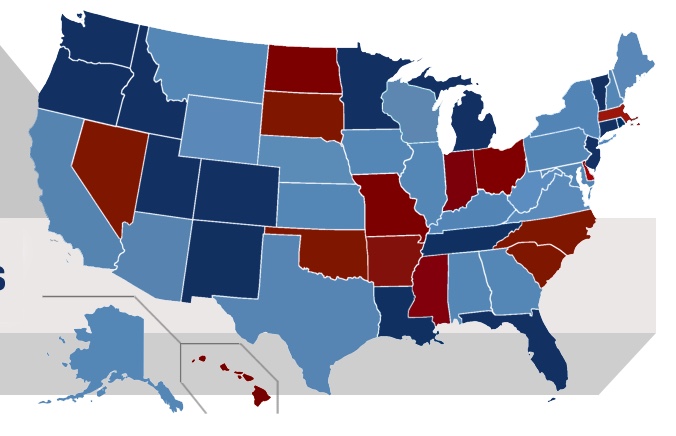
If you look at the map of America, where you can see requests about free granny porn, the most requests are highlighted in blue. You can notice that this is a very popular category of porn, which many people like, regardless of their age. And after answering the question, «Is it legal?» Rocky Anderson answered that it is not illegal to watch porn starring adult actors and if you are an adult, it is perfectly legal and considered normal for everyone in America. The main thing is not to violate current U.S. law, as well as the state in which you are located.
Who was Rocky Anderson, his biography, and what did he do?
Childhood Rocky
Ross "Rocky" Anderson was born in Logan, Utah, in 1951. His parents' names were Roy and Grace Anderson, and they were employees of the Anderson Lumber Company, a family business that was founded by Rocky's great-grandfather, who lived in Norway, was a carpenter, and had moved to live in America.
Anderson family were not wealthy people, but they lived quite comfortably in Logan. With a cozy house on Maple Drive, the Anderson family (including older brothers Rocky, Bob, and Kristen) enjoyed Logan's charm, beauty, and safety.
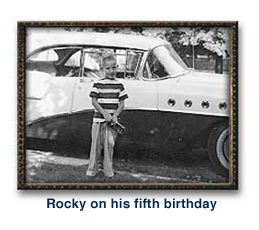
Andersons' family often had neighbors visiting to eat together in the backyard on the picnic table. While the new church building was being built, church services were held in the old Quonset Shack, a curved metal building built during World War II. Logan was a place where young children could take the bus safely into town, and where events such as the Logan Tabernacle Easter egg hunt and soccer games at the old University of Utah Stadium brought the whole community together.
When Rocky was 7 years old, his father was transferred to Salt Lake City and became a sawmill manager. Rocky went to Morningside Elementary School. One of the highlights of his childhood in Salt Lake City was watching Willie Mays and the San Francisco Giants play in an exhibition game at Derks Field, where the Salt Lake Encore team was then playing. Intrigued by Mickey Mantle and Roger Maris' quest to break Babe Ruth's scoring record, Rocky became an avid baseball fan.
Because he lived in the Salt Lake City area, Rocky knew the value of open spaces. Next to the Andersons' house on Shannah Street were several acres of thickets of oak trees, where the neighborhood children spent most of their playtime each week in what to them was a veritable forest.
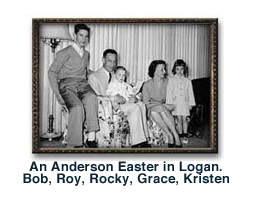 When Rocky was 10 years old, his father was promoted to president of the Anderson Lumber Company and transferred to the company's headquarters in Ogden. After that, the Anderson family moved to Ogden just in time for Rocky to start sixth grade at Polk Elementary School, where he was elected president of student government. Years later, Rocky remembers his older sister Kristen making posters late into the night to help him win the elementary school election.
Rocky attended Mount Ogden Junior High School and Ogden High School. During his high school years, Rocky worked part-time at the Anderson Lumber store, building roof trusses, loading lumber and delivering cabinets so he could have his own pocket money and not have to ask his parents for it. He also did roof shingles in the afternoons after that, he would quickly run to the showers, change clothes to play guitar at local dances and concerts with his rock and roll band, The Viscounts. When Rocky's son played guitar at full volume many years later, Rocky knew that if his father (who had survived the Viscount years) were alive, he would smile, wink and say something funny about karma.
College, Work & Family
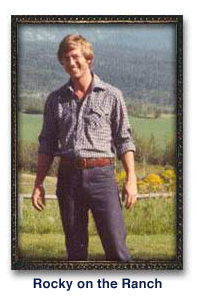 After Rocky graduated from high school, he enrolled at the University of Utah, where he graduated with honors with a degree in philosophy. And then it was time to decide what he wanted to be in the future, but first Rocky spent a summer building a fence on a ranch in Wyoming. He also worked as a cab driver, a methadone clinic employee, a waiter, a truck driver, and a construction handyman. Then, wanting to see more of the world, Rocky traveled for several weeks through southern Europe and worked as a dishwasher and handyman at a biological institute in Freiburg, Germany for several months.
The study of history and philosophy inspired Rocky to find a vocation that would help him make a difference in the world. Rocky believed that a career in law as well as public service would provide great opportunities to create positive change in his country.
Rocky moved to Washington, D.C., where he attended the National Law Center at George Washington University. While in law school, Rocky worked at a small law firm, doing his best to support himself for all three years. After graduating with honors from law school in 1978, Rocky returned to Salt Lake City and began his legal career. Immediately after he graduated from law school, Rocky began handling jury trials and prepared and argued two cases before the Utah Supreme Court during his first year of practice. As his career progressed, Rocky tried many important cases, and often did so for free. 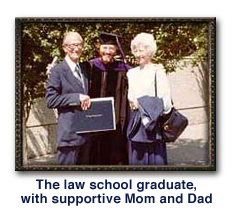
According to Rocky, "the highest calling of a lawyer" is to see that the law is applied fairly and equally to all. Over the next 20 years, Rocky worked with many of Salt Lake City's top lawyers, and his practice grew into his association as president of the law firm «Anderson & Karrenberg».
Listed among the best lawyers in America, Rocky has handled many complex commercial cases during his legal career, including antitrust and securities cases on behalf of injured plaintiffs. In the 1980s, Rocky was instrumental in obtaining payouts for thousands of depositors who lost their savings in failed Utah banks. He was an advocate for joint custody so that more men could and would want to maintain a responsible and consistent relationship with their children after divorce. Rocky was an effective advocate in groundbreaking civil rights cases, including Bott v. Deland, which greatly expanded prisoner protections. Rocky also worked to create a program that provided access to legal services for people who did not qualify for Legal Aid or Legal Services but could not afford to pay the full cost of critical legal services.
Rocky Anderson proved himself to be a strong and effective manager when he was chairman of the Utah State Bar Association's litigation section, president of a multi-million dollar law firm, and lead counsel in some of the most important cases tried in Utah state courts over the past 25 years. In addition to providing free legal assistance to the homeless, economically disadvantaged and disabled, he has been a leader in several non-profit organizations (including ACLU of Utah (president), Planned Parenthood Association of Utah, Utah Common Cause, Citizens for Penal Reform (founder and president), Guadalupe Educational Programs (president)) and has contributed thousands of hours of volunteer work to help create a better, safer and more sustainable society.
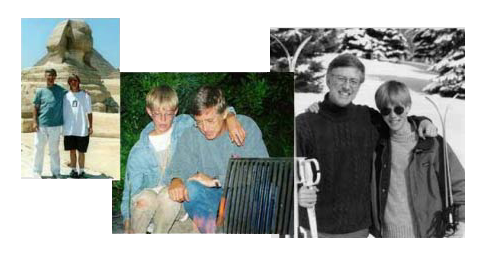
About four years after starting law practice, Rocky married a freelance writer and mother of two boys. Together they had a wonderful son who is now a 29-year-old lawyer. Although they divorced, Rocky shared custody of his son, who lived with each parent half the time until he was 18. Joint custody allowed both Rocky and his ex-wife to be actively and continuously involved in their son's life. During his son's years in elementary school, Rocky spent time every week cooperating with the class and always took a keen interest in his son's education. Creating a safe, healthy, nurturing community for Rocky's son and others was the driving force behind most of his volunteer activities.
Political, Humanitarian, and Executive Experience
Rocky Andenderson's life stance has always been that justice - social, environmental and economic - should be the primary goal of public policy. His sincere commitment to social justice is reflected in the many articles and columns he has written for local publications. For example, he has written magazine articles on such diverse topics as ethics in politics, anti-racism and criminal justice reform. He also wrote a weekly column for The Enterprise, Utah's business newspaper, in which he covered such issues as tax reform, valuing diversity and the importance of character in public life.
With the help of dedicated campaign workers, contributions from hundreds of people, and a huge volunteer organization, Rocky ran an aggressive, principled campaign for Congress as the Democratic candidate (after a primary campaign) in Utah's Second Congressional District in 1996. Without any financial help from the Democratic Party, but with record contributions from individuals, Rocky garnered more than 100,000 votes in the district. Even compared to Merrill Cooke, who had 98% initial name recognition and spent nearly $1 million of his own money, Rocky received 55% of the votes cast in Salt Lake City, compared to 39% for Cooke. However, Rocky lost the race due to a lack of support in a very conservative district where there was clear hostility to Rocky's early principled stance in favor of marriage equality.
In 1999 Rocky Andenderson ran for mayor of Salt Lake City. He beat his 10 opponents by a wide margin in the primary election and then won 60% to 40% in the general election. In 2004 Rocky was re-elected to another four-year term.
During his two terms as mayor, Andenderson was chief executive officer of the Salt Lake City Corporation, overseeing an annual general fund budget of more than $200 million and nearly 3,000 employees. He was also chief administrative officer of the huge Salt Lake City Redevelopment Agency and chief administrative officer of the Salt Lake International Airport. He negotiated with three public employee unions. Salt Lake City was the only city in Utah to engage in collective bargaining, which was wholeheartedly supported by Mayor Anderson. 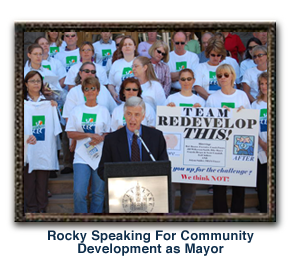
During his years as mayor, Rocky successfully fought many important battles, including victories for mass transit, sensible long-term growth planning, greater respect and legal protections for minorities (including equal benefits for gays and lesbians and their partners), and unprecedented youth programs. He successfully challenged the state's «English-only» law and opposed grandiose Homeland Security campaigns against immigrant workers at the nation's airports.
Rocky Andenderson ran a successful one-man national security campaign to have all checked baggage checked at every airport. He eliminated the DARE program in Salt Lake City schools and implemented proven, much more effective drug prevention programs in those schools. Rocky implemented perhaps the most comprehensive restorative justice program in the country, created citywide after-school and summer education programs, and is considered by many to be the «greenest mayor» in the United States. During his tenure as mayor, he has preserved and significantly added to the city's stock of affordable housing and open spaces. He has reduced greenhouse gas emissions from urban activities by 31% in three years and has been one of the world's leading climate activists, winning the World Leadership Award in London for his environmental programs and advocacy.
Unlike those who run for elected office, Rocky is not driven by self-interest or a lack of other pursuits in life. He has always looked for the best way to use his skills and energy to make a difference.
After serving two terms as mayor, Rocky declined to run for a third term and instead devoted himself to educating, motivating and mobilizing people to take action to end human rights abuses. Anderson recognizes the importance of people at the grassroots level advocating and pushing for change. He stated, «We keep expecting elected officials to do the right thing, when in fact they never do unless pushed.»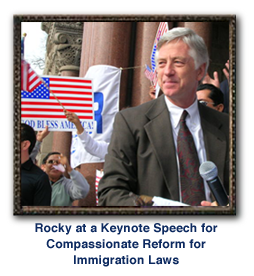
Rocky founded High Road for Human Rights, a nonprofit organization dedicated to achieving major reform of human rights policy and practice in the United States through unique, coordinated and sustained grassroots activism that complements the work of other human rights organizations. High Road for Human Rights has focused primarily on five issues: torture and undermining the rule of law, genocide, slavery, the death penalty, and the effects of the climate crisis on human rights. For his work on human rights issues during his tenure as executive director of High Road for Human Rights, Rocky received the Gandhi, King, Ikeda Award from Morehouse University and the Patriot Award from the Bill of Rights Defense Committee.
In September 2008, Rocky appeared before the U.S. House Judiciary Committee at hearings on executive branch abuses (these followed Rocky's persistent advocacy, including two intense meetings with Congressman John Conyers, then chairman of the U.S. House Judiciary Committee, and other members of the Congressional Progressive Caucus) and spoke at rallies organized by High Road for Human Rights, calling for accountability for torture. He has also researched, written, produced and voiced multimedia material about torture and undermining the rule of law, issues in which he has enormous expertise and passion.
Rocky Andenderson also remained active in climate protection, speaking at numerous venues across the U.S., Canada and China. As the only major city mayor to advocate the impeachment of President George W. Bush over his ignorance of intelligence that Osama bin Laden was going to attack the United States and his dishonesty to the American people in the run-up to the invasion and occupation of Iraq, Rocky proved his «non-partisanship» by convincingly demonstrating that the rule of law had been seriously undermined by both major parties and by Presidents Bush and Obama. Anderson makes a convincing case that, despite his earlier belief that the Bush administration would be only an «aberration» in U.S. history, «President Obama institutionalized some of the worst abuses of the Bush administration» and went even further in establishing an imperial presidency that fostered a two-tiered justice system in the United States. 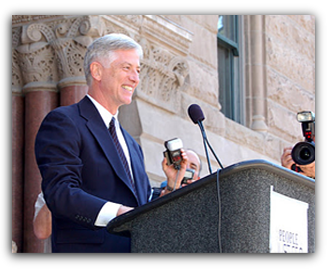
On August 11, 2011 Rocky denounced the Democratic Party and withdrew his membership. In a letter to the Democratic Congressional Campaign Committee, he wrote: «The Constitution has been destroyed, and the Democrats have stood by without making a sound. This is a heartless, unprincipled party, bought and paid for by the same interests that buy and pay for the Republican Party.» On January 13, 2012, Anderson accepted the presidential nomination of the Justice Party, a new national political party. The party's guiding principles are honesty, fairness, and freedom for all.
Rocky Andenderson advocates:
- An immediate end to the ongoing wars
- Advancing the public interest by defeating systemic corruption, which has led to massive public policy failures.
- Mandatory health insurance for all citizens
- Urgent U.S. international leadership to avert the most catastrophic consequences of climate disruption
- Adequate revenues to balance the budget through fair taxation
- Substance Abuse Treatment as Public Health
- Instead of criminal justice, the question is.
- Put an end to our government's stranglehold on the military-industrial complex
- Control of the Federal Reserve System by the Treasury Department and Congress
- A constitutional amendment repealing Citizens United and allowing restrictions or prohibitions on the corrupting effects of money in our electoral system
- Balanced budget (or surplus), except during periods of war or serious recession
- Put an end to the legal concept of the corporate «persona»
Indeed, Rocky Anderson, former mayor of Salt Lake City, Utah, was known for his civil liberties advocacy and outspoken statements on controversial issues, including pornography. As mayor, Anderson was a vocal opponent of Utah's strict laws against fotos pornôs gratuitas, which he argued were unconstitutional and violated the First Amendment.
Anderson's position on pornography reflected his broader political philosophy, which emphasized individual rights and freedoms so that adults could legally view milf porn websites. He also advocated social justice, environmental protection, and a host of other progressive ideas.
However, it is important to note that viewing and accessing illegal pornographic material is prohibited. You can legally view ass xxx photos and other porn if you are over 18 years old.
In general, the issue of legal viewing of pornography in America has been the subject of debate and discussion with different opinions and views, but everyone loves and can watch MILF porn videos upon reaching the age of majority. Rocky Anderson, a former Utah politician, was one of those who addressed the issue on his website voterocky.org. Ultimately, it's up to people to look into the laws and regulations regarding pornographic content and make responsible and informed decisions.
Voterocky.org website is no longer up and running and has nothing to do with Rocky Anderson.